From humble rushlights and smoky candles to Christmas trees glowing against the winter darkness, the history of illumination is also a history of hope, fear, faith, and human ingenuity.
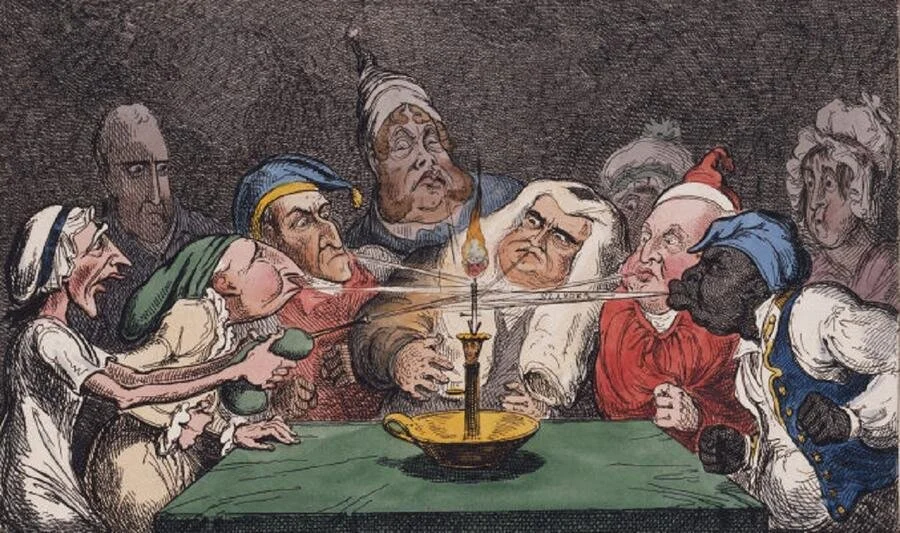
There is something about November that makes us reach for the light. Maybe it’s because the sun is leaving up and disappears much earlier. It’s the shadows that gather in the corners of our homes. We light candles, turn on lamps, hang strings of tiny glowing bulbs, and perhaps never give much thought to the extraordinary luxury of doing so.
But imagine a November evening three hundred years ago. Outside, the wind rattles the shutters, blows the leaves, and shakes the barren trees. Inside, a family gathers around the hearth, illuminated by a single fireplace, reclining in their chairs. Someone has brought out a candle, although it will not be wasted unnecessarily. Perhaps there is a rushlight burning in an iron holder, its small flame casting more shadows than it chases away. The darkness beyond the windows is almost complete.
For most of human history, light was something that had to be gathered, made, purchased, tended, and protected. It cost money, labor, and sometimes lives. Yet light was never merely practical. Across centuries and cultures, it became a symbol of everything people hoped would survive the darkness.
The First Light: Fire and the Hearth
Long before candles, lamps, or electricity, there was fire. There was a large fire, in the main room. This was the place where parents read their bibles to little one ,and children learned to write the alphabet in the soot and also where food was cooked and life was illuminated.
In many homes, it remained the principal source of evening light well into the nineteenth century.Imagine trying to sew, read, or prepare tomorrow's work by firelight. The room would have been unevenly illuminated, with shifting shadows and smoke that depended on the hearth and ventilation.
But the hearth meant more than convenience. It represented the household itself: warmth, nourishment, security, and continuity.
A burning fire could welcome a traveler, while an extinguished hearth might suggest an abandoned home.
No wonder fire became so deeply embedded in the stories and rituals of winter.
Rushlights: The Poor Man's Candle
One of the most fascinating forgotten forms of lighting is the rushlight.
Before inexpensive manufactured candles became widely available, rural families gathered rushes from marshy ground, peeled away much of their green outer covering, dried the exposed pith, and coated it in animal fat.
The resulting rushlight was held at an angle in a small iron clamp.
It was not glamorous.
Depending on its length and construction, it might burn for only twenty or thirty minutes, although some lasted longer.
Imagine children gathering rushes in late summer, knowing those humble plants would help illuminate their family's winter evenings.
Light was something you prepared for months in advance.
And here is something worth remembering: when we picture a beautiful colonial or medieval cottage illuminated by dozens of candles, we are often imagining a level of comfort many ordinary families simply could not afford.
Tallow and Beeswax: Even Candles Had a Social Class
Not all candles were created equal.
Tallow candles, made from rendered animal fat, were relatively affordable but could smoke, smell unpleasant, and require frequent wick trimming.
Beeswax candles were another matter entirely.
They burned more cleanly and were considerably more expensive. Their use was especially associated with wealthy households and religious institutions.
A room filled with beeswax candles could therefore communicate wealth and status.
In churches, candles also carried spiritual significance. Their flames could represent prayer, divine presence, devotion, and the light of Christ.
A candle was simultaneously an everyday object, an economic commodity, and a powerful religious symbol.
Something so small could tell us an extraordinary amount about the people who owned it.
Oil Lamps: Bringing Brighter Evenings Home
Oil lamps have illuminated homes and sacred spaces for thousands of years.
Ancient Mediterranean societies used lamps fueled by olive oil and other available oils. Later households used various animal and vegetable oils, depending on local resources and cost.
By the late eighteenth century, innovations such as the Argand lamp offered dramatically improved illumination.
For wealthier households, these brighter lamps transformed the possibilities of evening life.
Reading, entertaining, working, and socializing could continue more comfortably after sunset.
Yet brighter light remained unequally distributed.
The ability to illuminate a room was, in many ways, the ability to purchase more usable hours in a day.
Gaslight: When the Night Began to Change
During the nineteenth century, gas lighting transformed streets, businesses, theaters, and homes.
Imagine walking through a city where the darkness had once swallowed entire streets, only to find pools of artificial light glowing along the pavement.
Gaslight made nighttime commerce and entertainment easier, but it also brought new hazards, including leaks, fumes, and fires.
And, of course, it changed the atmosphere of the city.
The gaslit Victorian street became a setting for mystery, crime fiction, ghost stories, and Gothic imagination.
Think of the lamplighter moving through the evening streets, bringing little islands of illumination into the darkness.
It is a wonderfully evocative image.
But it also reminds us that the illuminated modern world was created gradually, one technological change at a time.
Why Did People Put Candles in Their Windows?
A single candle glowing in a window is one of the most enduring images of winter. I always have a candle in my window.
Its meaning has never been universal.
In different communities and historical periods, a window candle might express hospitality, religious devotion, remembrance, or welcome.
In Christian symbolism, light frequently represents Christ, spiritual guidance, and hope. In some Christmas traditions, a candle in the window became associated with welcoming the Holy Family or offering hospitality to travelers.
Elsewhere, a window light could serve a much simpler purpose: helping someone find their way home.
But, we should be careful not to assign one ancient explanation to every candlelit window.
Traditions change. Meanings accumulate. Stories are retold.
And sometimes the meaning we cherish today is quite different from the one our ancestors would have recognized.
Winter Lights: Hope in the Darkest Season
Across the Northern Hemisphere, the shortening days have inspired rituals involving fire and illumination.
Different traditions developed within their own religious and cultural histories.
In Jewish tradition, the lights of Hanukkah commemorate the rededication of the Second Temple and are associated with the miracle of the oil.
In Christianity, Advent candles mark the approach of Christmas, while Christmas lights can evoke Christ as the light of the world.
In various European winter customs, fires, candles, and later lanterns helped mark the turning of the season.
These traditions should not be treated as interchangeable. Each has its own history and meaning.
Yet they reveal a recurring human response to darkness: we illuminate what matters to us.
Light can become an expression of faith, remembrance, celebration, or anticipation.
The Christmas Tree That Nearly Burned Down the House
Before electric Christmas lights, some families illuminated their Christmas trees with actual candles.
Yes, real flames attached to the branches of a tree.
The effect must have been breathtaking.
It was also dangerous.
Candles were often lit only briefly and under close supervision because of the risk of fire.
Then came a remarkable Christmas experiment.
In December 1882, Edward H. Johnson, an associate of Thomas Edison, decorated a Christmas tree in New York City with eighty electric bulbs in red, white, and blue.
The tree even revolved!
Imagine seeing such a thing for the first time.
At a time when electricity was still unfamiliar to many households, a glowing, rotating Christmas tree must have seemed almost magical.
Electric Christmas lights were initially expensive luxuries. It took decades for them to become ordinary household decorations.
Today, we untangle strings of lights without thinking much about them.
But their history is a reminder that something we consider perfectly ordinary was once a technological wonder.
Why We Still Love Candlelight
Here is the curious thing.
We no longer need candles to illuminate our homes.
With the flick of a switch, we can fill an entire room with light far brighter than anything available to most of our ancestors.
Yet we still light candles.
We place them on birthday cakes, around dinner tables, in churches, at memorials, and in windows during the holidays.
Why?
Perhaps because candlelight makes us notice the light itself.
A flame is fragile. It moves. It consumes its fuel. It eventually disappears.
Unlike the steady brightness of an electric bulb, a candle reminds us that illumination requires tending.
It creates an atmosphere in which people slow down, gather, remember, and tell stories.
And perhaps that is why candles have survived every technological revolution intended to replace them.
We no longer need them in quite the same way.
But we still find meaning in their glow.
A Little Light for the Long Nights
The next time you switch on a lamp, light a candle, or hang Christmas lights around a window, consider the generations who came before us.
The child carefully adjusting a rushlight.
The candle maker dipping wicks into tallow.
The lamplighter walking through a foggy Victorian street.
The family watching real candles flicker among the branches of a Christmas tree.
And the astonished visitors who first saw an evergreen illuminated by electric bulbs.
Our relationship with darkness has changed enormously.
Our desire to fill it with meaning has not.
So as November settles around us and winter approaches, perhaps we might take a moment to appreciate the smallest of lights.
After all, history is never just the past.
Sometimes, it is still glowing in our windows.
Historical Persuasions explores the curious, forgotten, and extraordinary stories that connect us to the past.
Join us December 10 for The Dark History of Christmas, a live online evening exploring ghost stories, Krampus, winter folklore, and the stranger traditions of the holiday season.
Discover more at www.historicalpersuasions.com.
Want more: